
Services · LoRaWAN Network Design
LoRaWAN networks designed to work on the difficult site, not just the easy one.
Coverage is decided long before the first gateway goes up. We survey the site, model propagation for the real terrain and buildings, and design the network server, backhaul and security so the network holds up at scale.
What's included
What you get.
Site survey & RF analysis
Terrain, structures, noise floor and interference measured on site, not guessed from a map.
Coverage modeling
Propagation models and gateway placement plans for every area that has to report.
Network architecture
Private, public or hybrid. ChirpStack, TTN, Actility, Helium and others evaluated against your needs.
Backhaul & power
Ethernet, cellular or satellite backhaul, with solar and battery sized for the worst month of the year.
Design
Bad network decisions are the most expensive ones to fix.
Moving gateways, re-climbing towers and replacing devices after rollout costs far more than getting the design right. A proper design phase de-risks everything that follows.
What this means for you
- Gateway count and placement justified with measurements
- Uplink margins that survive rain, foliage and seasonal change
- A network server choice you won’t be trapped by
- Documentation your team can operate from
Network infrastructure
We deploy large-scale LoRaWAN utility networks.
A utility-grade network is more than a gateway on a pole. We build the whole layer: carrier-class gateways on facilities and rooftops, self-powered outdoor sites where there is no power or backhaul, and the enclosures, batteries, grounding and mounts that keep them running for years across a campus, a city or a service territory.
What we deploy
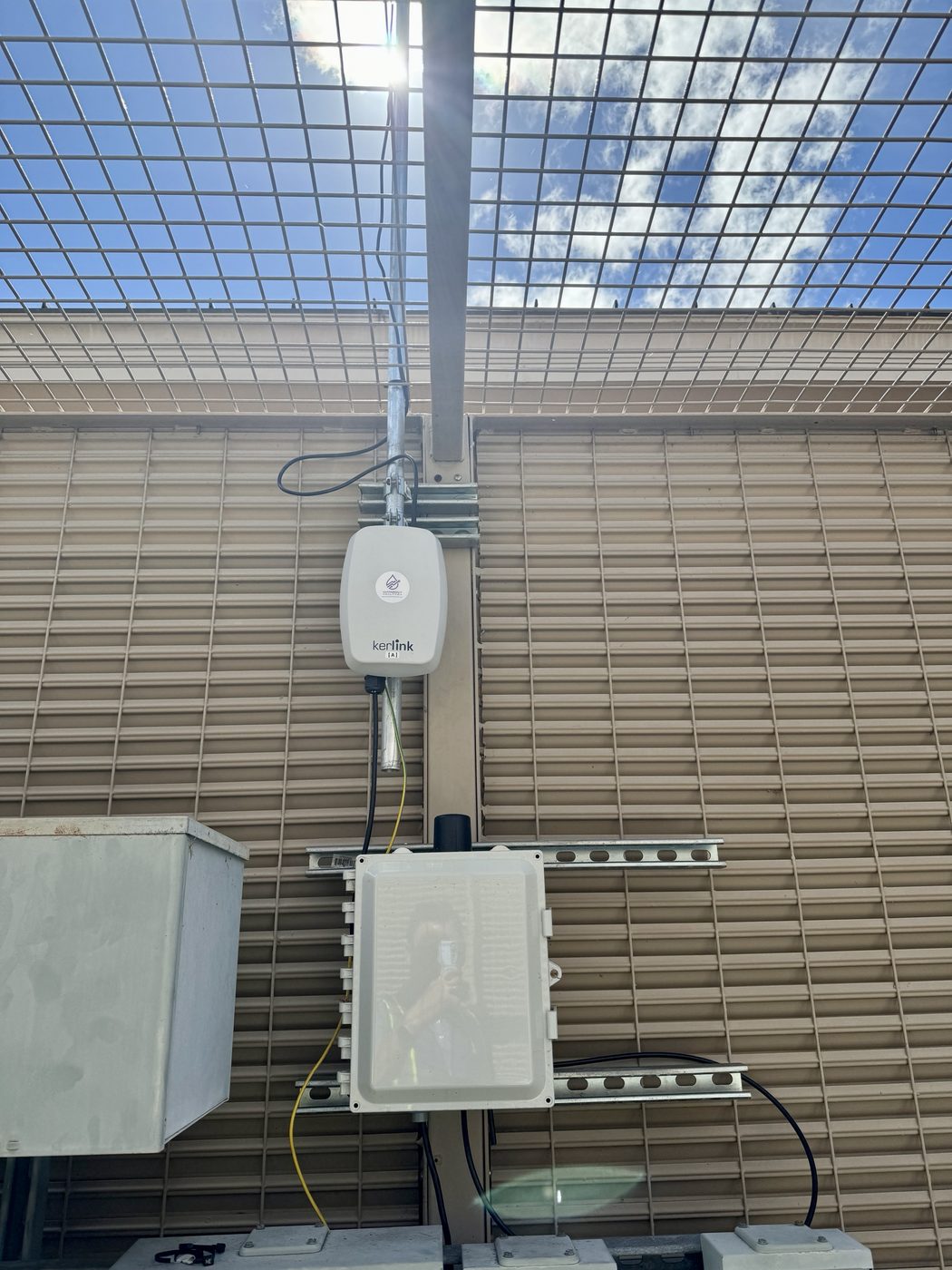
- Facility gateways on rooftops, mechanical yards and equipment screens
- Outdoor municipal sites on poles, medians and rights of way
- Solar and battery power sized for the worst month of the year
- Cellular, Ethernet or satellite backhaul chosen per site
- Hardened enclosures, surge protection and grounding as standard
In the field
Facility, infrastructure and outdoor municipal sites.
The same network layer, built three ways depending on what the site offers: power and Ethernet on a building, a pole in the public right of way, or nothing at all.
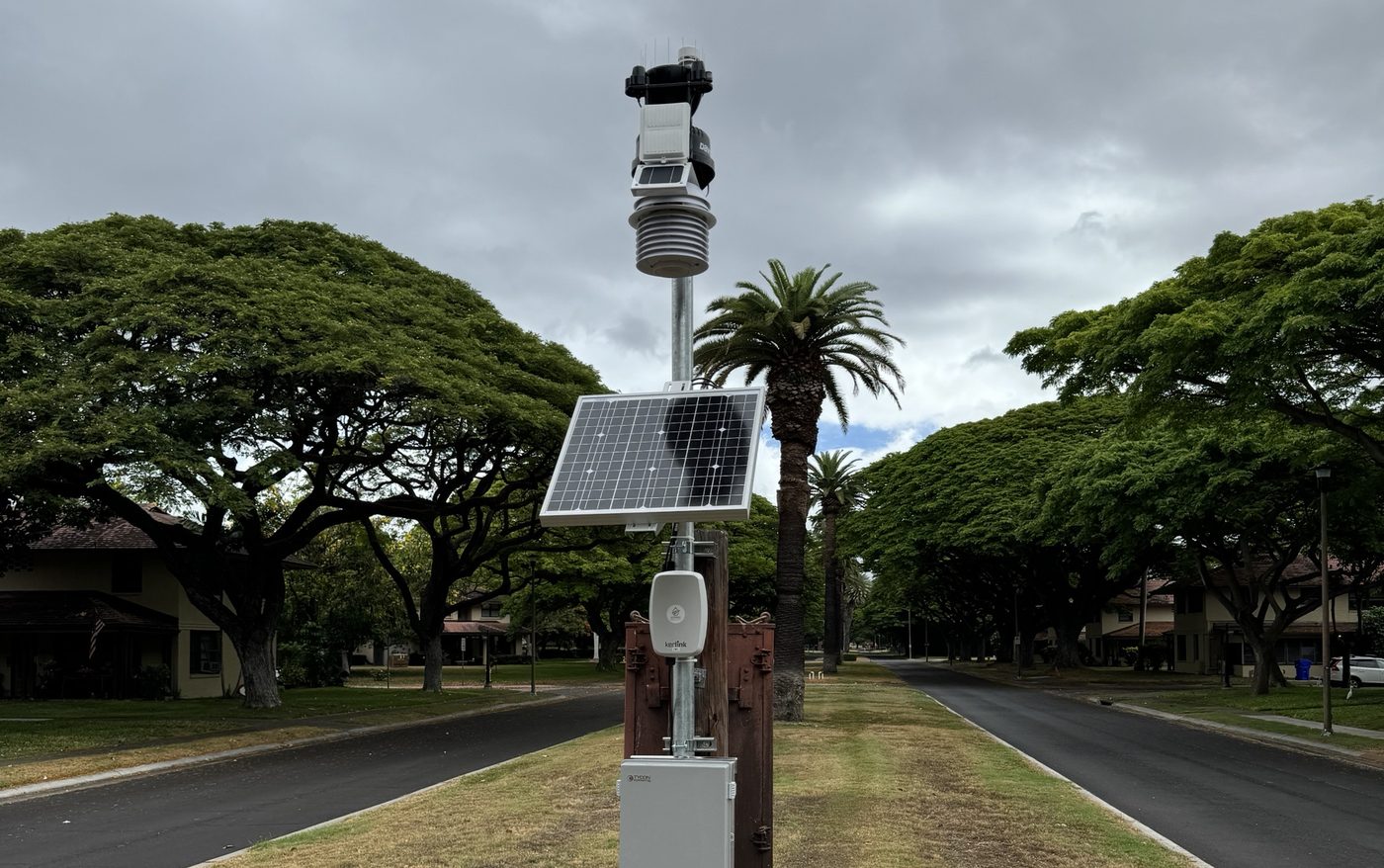
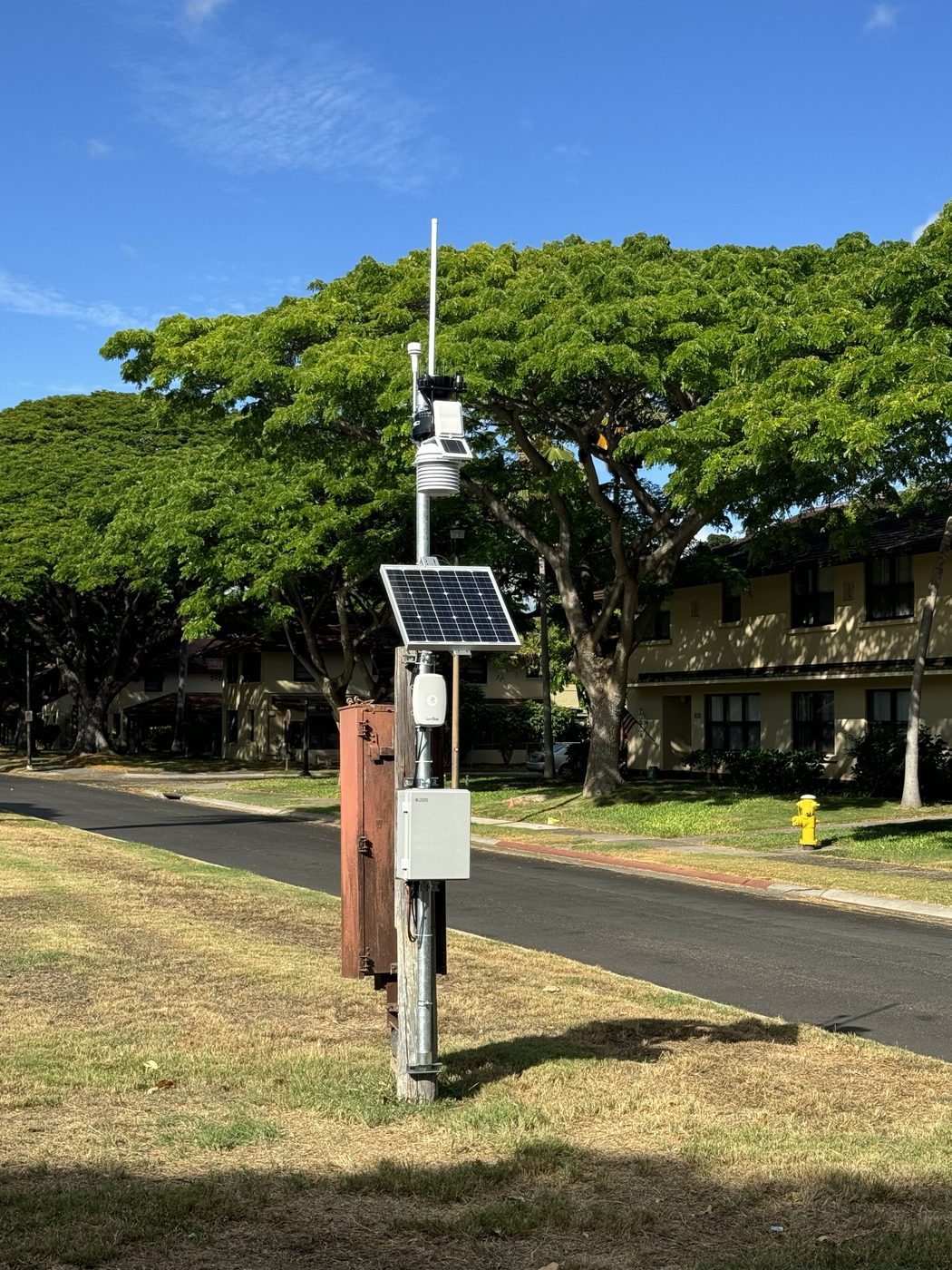
Pole-mounted gateway and weather station
Gateway, solar array and weather station on a single pole in a street median, covering the surrounding neighborhood with no trenching or utility hookup.
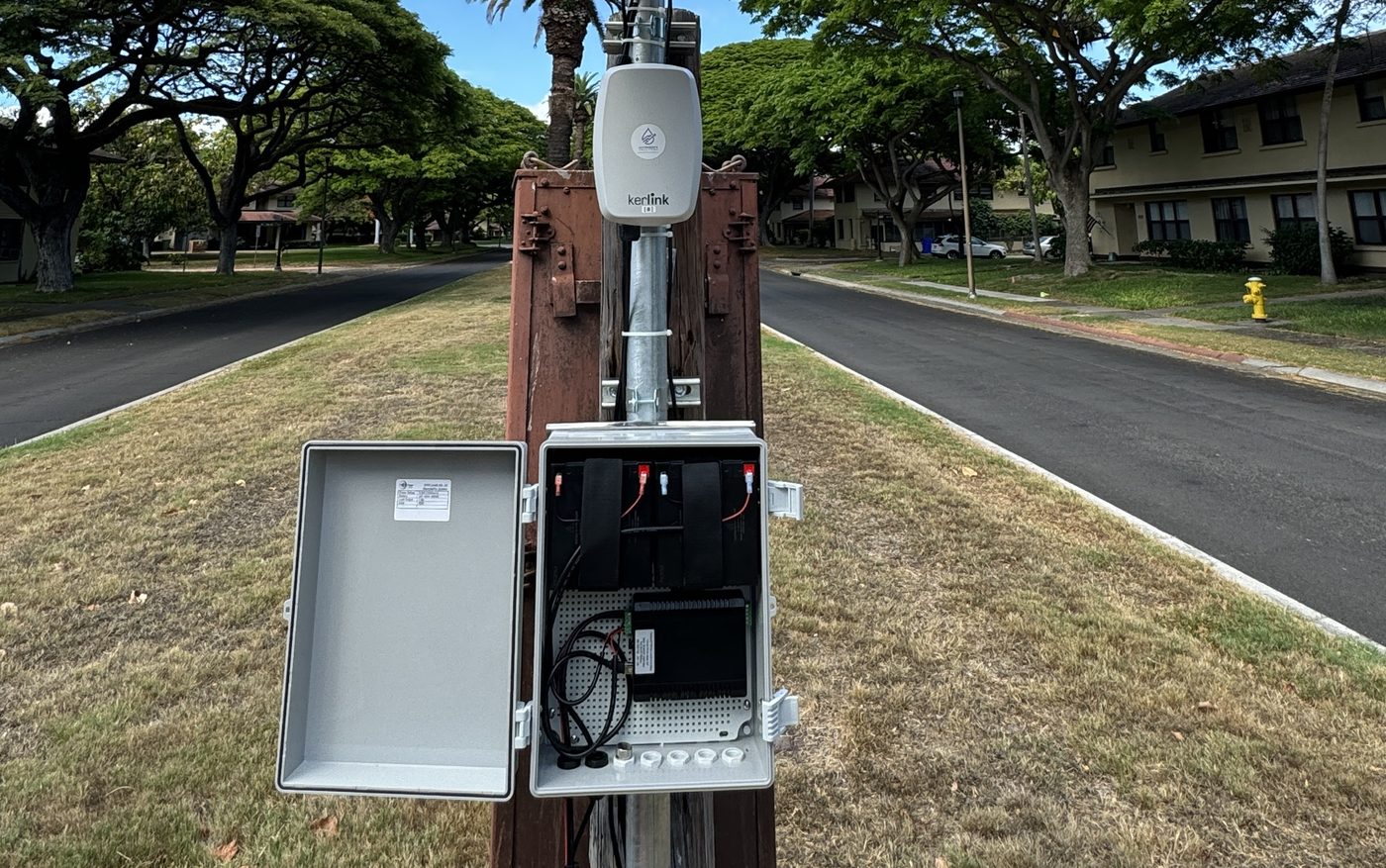
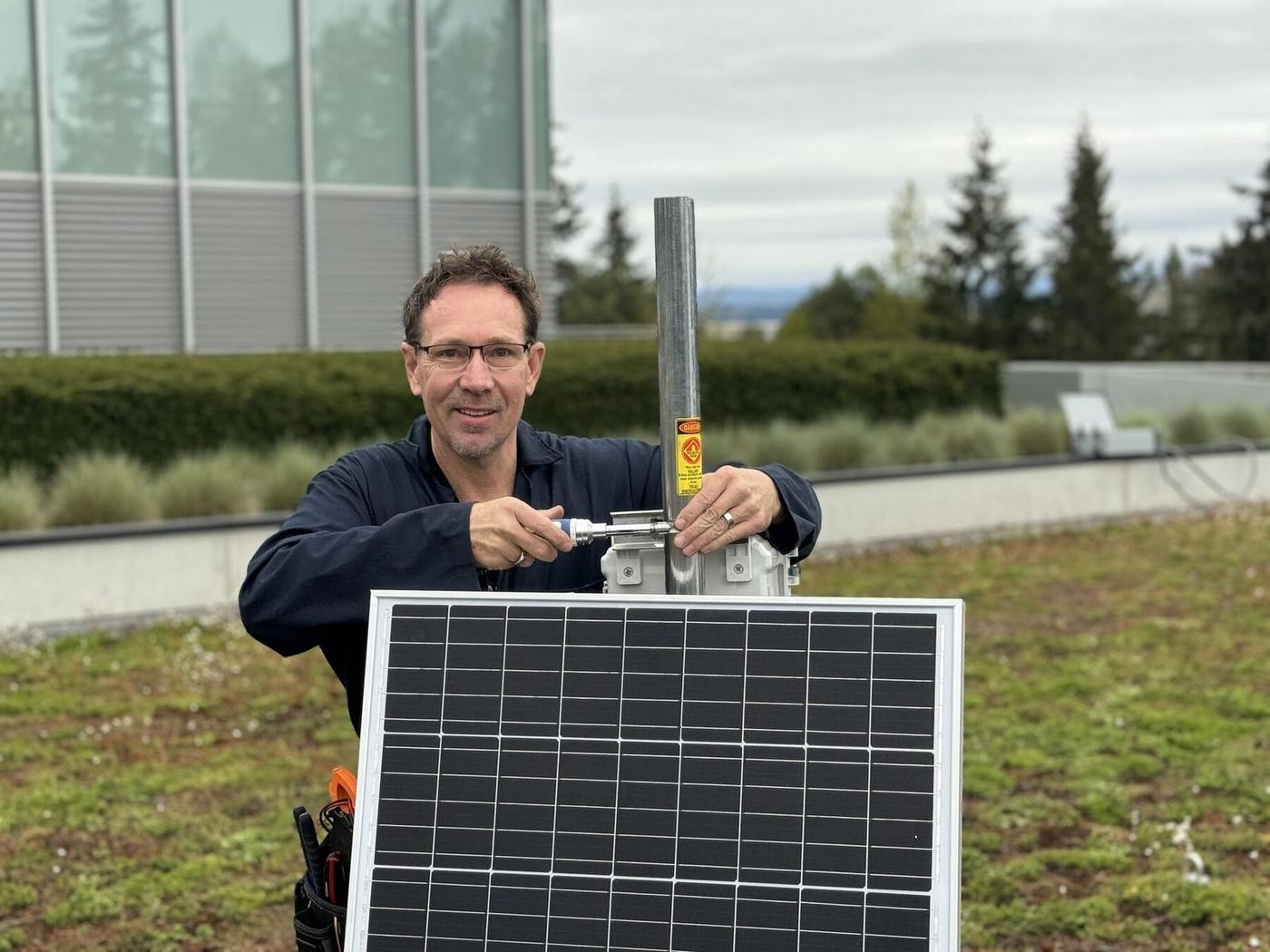
Batteries and charge control in a sealed enclosure
Deep-cycle batteries, a solar charge controller and clean wiring inside a weatherproof enclosure, so the site keeps reporting through cloudy weeks.
Process
How the engagement runs.
-
1
Discovery
Goals, sites, device counts, reporting intervals and constraints.
-
2
Survey
On-site RF measurements and candidate gateway locations.
-
3
Design
Coverage model, bill of materials and architecture document.
-
4
Validate
Field test with real devices before full rollout.
Industries
Where we apply it.
Do we need our own network, or can we use a public one?
It depends on coverage, data ownership and scale. We compare private, public and hybrid options honestly, including the long-term cost of each.
How many gateways will we need?
That is exactly what the design answers. It depends on terrain, buildings and where devices sit, and a survey usually saves money over rules of thumb.
Can you work with an existing network?
Yes. We regularly audit, extend and fix existing LoRaWAN networks.
Start a project
Let’s talk about lorawan network design.
Tell us about the site and what you need to know about it. A senior consultant replies within one business day with a written recommendation and a fixed-fee proposal for the first phase.